
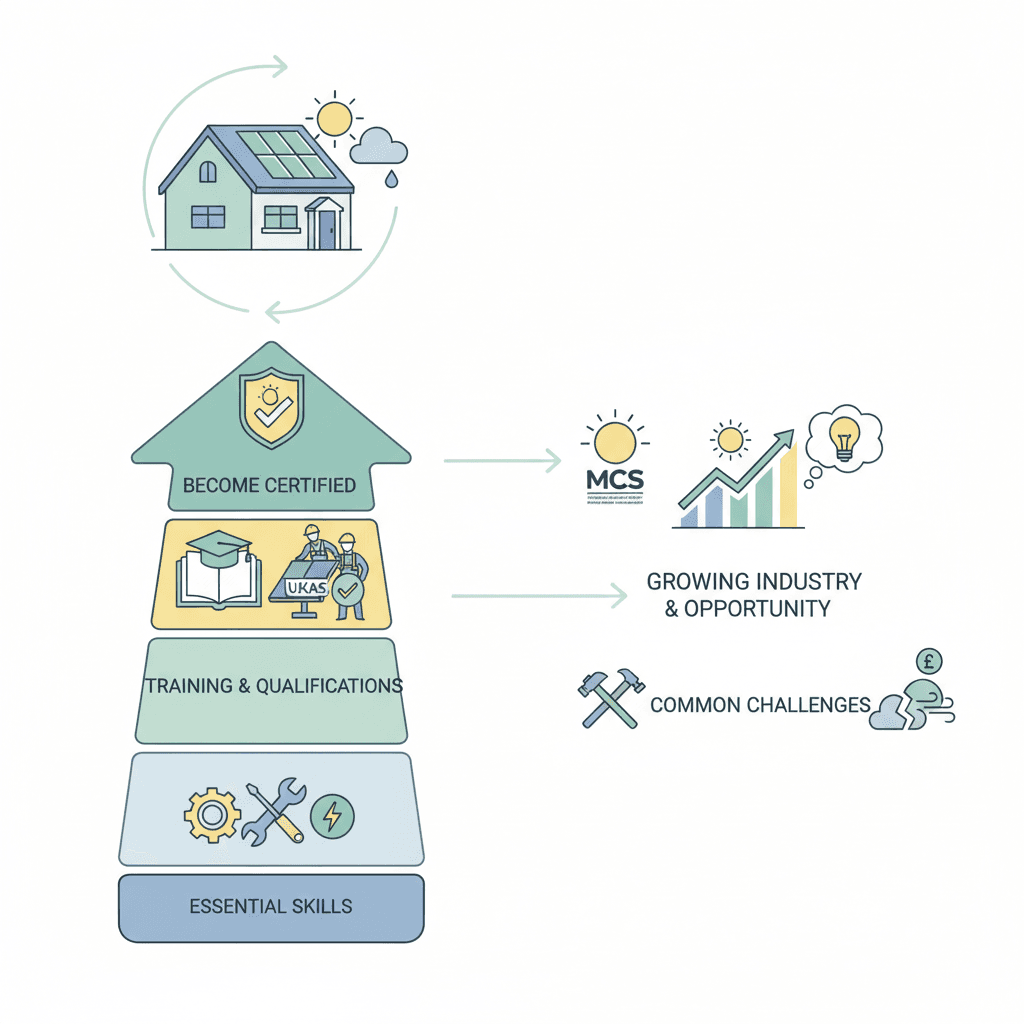
Thinking about becoming a solar panel installer in the UK? It's a growing industry with a lot to offer. This guide provides a practical overview of what's involved, from essential skills to common challenges.
Key Points
- Solar installation involves both electrical and roofing skills.
- Attention to detail and care are crucial, especially when working at height.
- Neat and tidy electrical work is essential due to the DC electricity involved.
- MCS accreditation is generally required to become a certified solar installer.
Common Misconceptions
- Misconception: One person can easily handle both roofing and electrical aspects. In reality, these are often separate specializations.
- Misconception: Solar installation is always consistent work. The industry can experience peaks and troughs, especially when starting out.
Real-World Advice
A typical day for a solar installer might involve assessing a roof for suitability, installing mounting equipment, wiring up solar panels, connecting the system to the grid via an inverter, and ensuring everything is working correctly. Problem-solving skills are essential for dealing with unexpected challenges on-site.
UK-Specific Considerations
In the UK, solar installers must adhere to Microgeneration Certification Scheme (MCS) standards to qualify for government incentives and export tariffs. You'll also need to be aware of local building regulations and Distribution Network Operator (DNO) requirements for grid connections. The weather in the UK can also be a challenge, requiring installers to work safely and efficiently in varying conditions.
When This Isn't Right For You
A career in solar installation may not be suitable for individuals who:
- Are uncomfortable working at heights.
- Lack attention to detail.
- Prefer consistent, predictable work schedules.
- Are unwilling to undertake the necessary training and certification.
Before You Spend Money
Before investing in training, research the job market in your area. Look for local solar installation companies and inquire about apprenticeship opportunities. Consider shadowing an experienced installer to get a feel for the work involved. Make sure you understand the costs associated with training and certification, and factor in the time it will take to complete these requirements.
Frequently Asked Questions
Q: What qualifications do I need to be a solar installer?
A: You'll typically need a relevant electrical qualification (like a Level 3 Diploma in Electrical Installations) and experience in roofing. MCS accreditation is also essential.
Q: Where can I find training opportunities?
A: Search online for MCS-accredited training providers and apprenticeship schemes. Contact local solar companies to inquire about potential opportunities.
Q: Is solar installation a good career?
A: It can be a rewarding career, offering the satisfaction of contributing to a sustainable future. However, it requires hard work, attention to detail, and a commitment to ongoing learning.
Summary
Becoming a solar installer in the UK requires a combination of electrical and roofing skills, attention to detail, and a commitment to safety. While the industry can be challenging, it offers a rewarding career path for those passionate about renewable energy. Obtaining MCS accreditation is crucial for professional recognition and access to government incentives.