
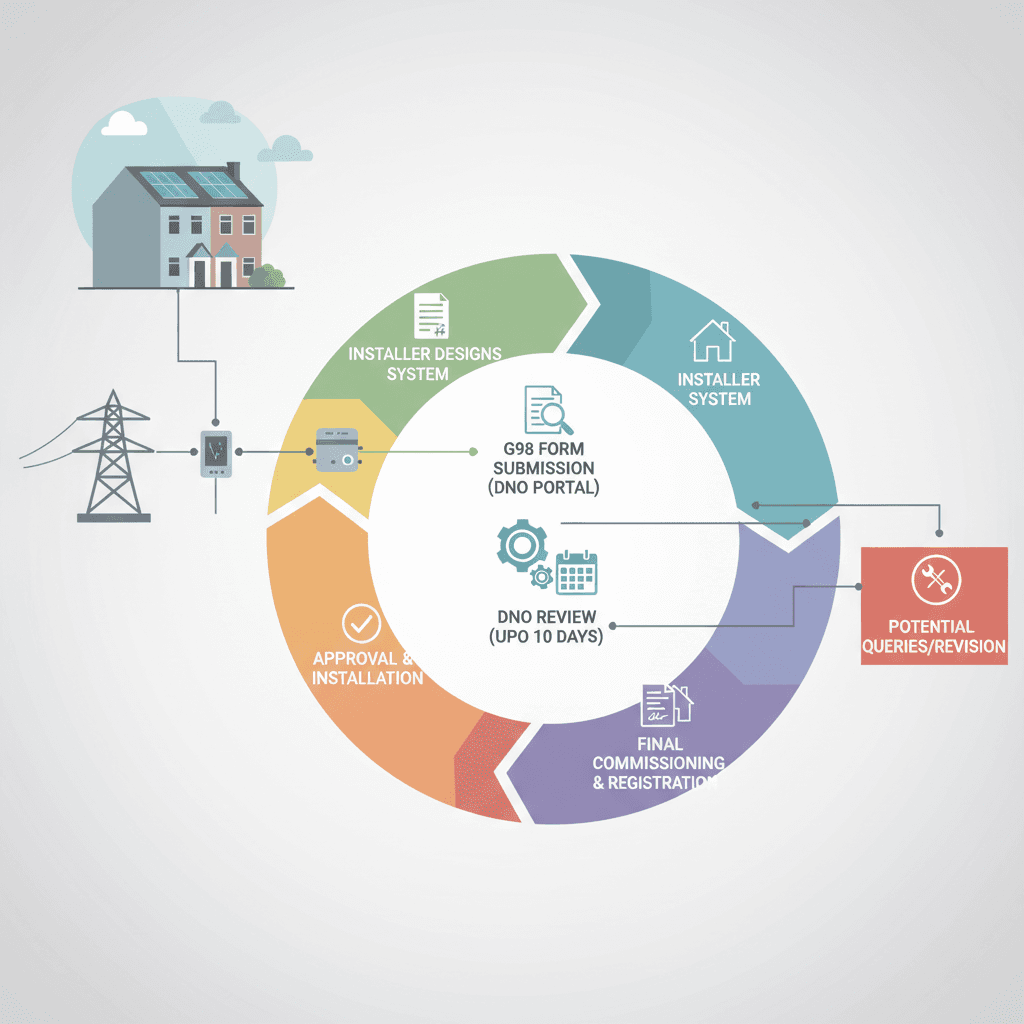
Installing solar panels in the UK requires adherence to specific regulations set by the Distribution Network Operators (DNOs). For smaller solar systems, the G98 application process is crucial. This guide explains the G98 process, potential pitfalls, and how to ensure a smooth application.
Key Points
- G98 applications are typically for smaller solar systems with inverters rated at or below 3.68 kW.
- G98 installations don't need prior approval, but the DNO must be notified after the system is installed.
- Systems with inverters over 3.68 kW fall under the G99 regulations and require pre-approval from the DNO.
- DNOs may impose export limits (G100) to prevent grid overload, even on smaller systems. This limits how much power you can send back to the grid.
Common Misconceptions
- All solar installations require pre-approval: Only systems with inverters exceeding 3.68 kW (G99) need pre-approval. G98 systems only require notification after installation.
- Export limits are always bad: While they restrict your export revenue, they can be a necessary compromise to get a larger system approved quickly.
- G98 is just a formality: While simpler than G99, proper notification is still essential to comply with regulations and avoid potential penalties.
Real-World Advice
Imagine you're installing a 3.5 kW solar system. Because the inverter is under 3.68 kW, you'll use the G98 process. You install the system, then notify your DNO. If you were installing a 5 kW system, you'd need to apply for G99 approval before installation. The DNO might approve it with a 5 kW export limit, meaning you can't export more than that, even if your system is generating more.
UK-Specific Considerations
The specific DNO responsible for your area will have its own procedures and response times. Some DNOs are more responsive than others. Export limits are more common in areas with weaker grid infrastructure. The Feed-in Tariff (FIT) scheme is now closed, so new installations will typically rely on the Smart Export Guarantee (SEG) for export payments. SEG tariffs vary between providers, so shop around for the best rate.
Before You Spend Money
Before investing in a solar system, determine the inverter size you need. If it's close to the 3.68 kW threshold, consider the implications of G98 vs. G99. Get quotes from multiple installers and ask about their experience with G98/G99 applications in your area. Understand the potential for export limits and how they will affect your return on investment. Check the MCS website for certified installers.
Frequently Asked Questions
Q: What happens if I don't notify the DNO after a G98 installation?
A: You could face penalties and be required to disconnect the system. It's crucial to comply with the regulations.
Q: What is a G100 export limit?
A: A G100 limit restricts the amount of power your system can export to the grid at any one time. This is to prevent overloading the local network.
Q: Can I increase my export limit later?
A: Possibly, but it will require a new application to the DNO and may involve network upgrades at your expense. It depends on the DNO's assessment of the grid's capacity.
Q: Where can I find more information about G98 and G99?
A: The Energy Networks Association (ENA) website provides detailed information and guidance on these regulations.
Summary
Navigating the G98 application process is a key part of installing solar panels in the UK. Understanding the regulations, potential export limits, and the role of your DNO will help ensure a smooth and compliant installation. Remember to choose a qualified installer with experience in your area.