
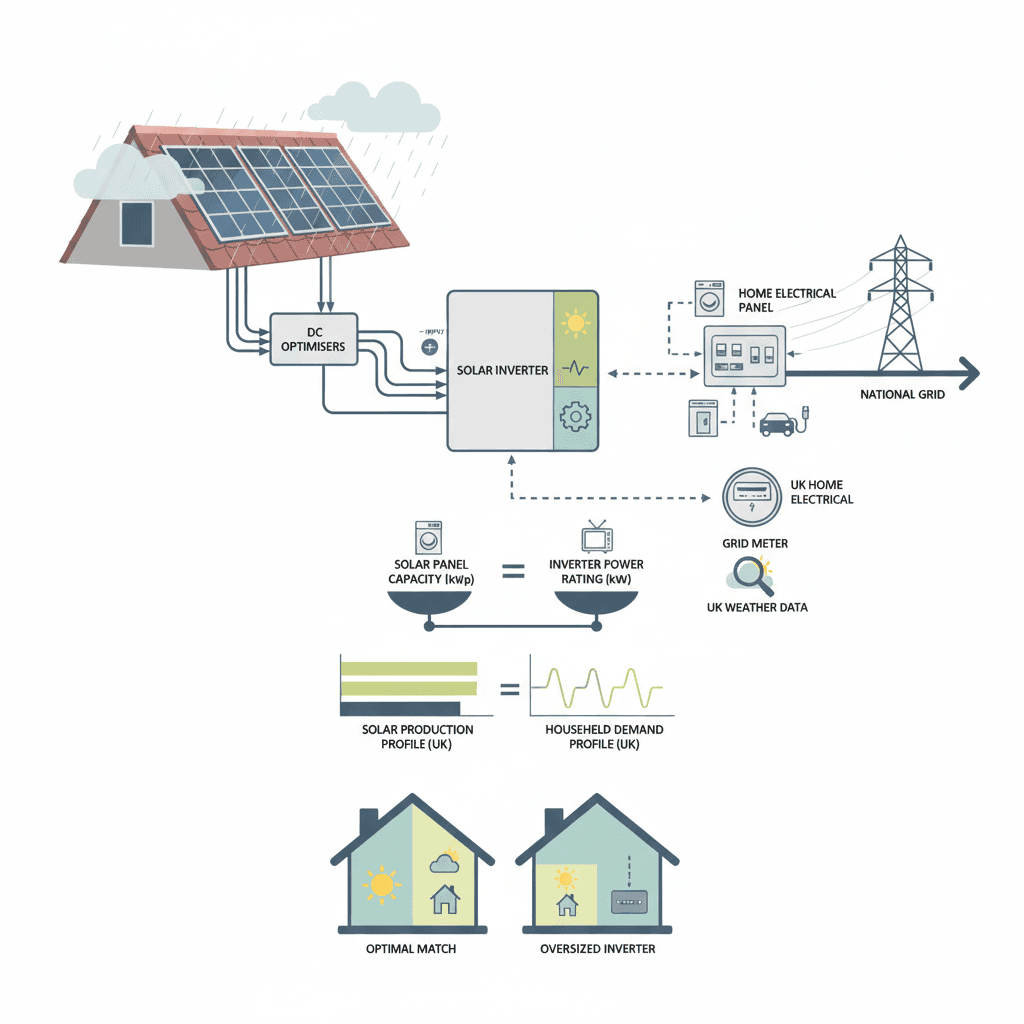
Selecting the correct inverter for your solar panel system is a critical decision. The inverter converts the DC electricity generated by your solar panels into AC electricity that can be used in your home or exported to the grid. In the UK, several factors influence the optimal inverter size, including battery storage, grid connection limits, and your energy consumption patterns. This guide will help you navigate these considerations.
Key Points
- For hybrid inverters with batteries, avoid undersizing to ensure adequate discharge rates.
- Single-phase supplies in the UK can accommodate inverters up to 10.5 kW.
- Oversizing can improve battery discharge but may be limited by DNO export restrictions.
- Consider inverter features like monitoring apps and installer back-end controls.
Common Misconceptions
- Misconception: A larger inverter automatically means you can export more energy overall.
- Reality: DNOs often limit export power (kW) at any given time, not total energy (kWh) exported per day.
- Misconception: Inverter size is the only important factor.
- Reality: Features like monitoring, grid support, and ease of installer access are also crucial.
Real-World Advice
Let's say you have a solar panel array capable of generating 6kW at peak. If you also have a battery and plan to use it regularly, a 3.68kW inverter might limit how quickly you can discharge the battery to power your home. A 5kW or 6kW inverter would allow for faster discharge. However, your DNO might limit your export to 5kW, even if your inverter is capable of more. This means any excess power above 5kW will not be exported, but it can still be used to charge your battery or power your home.
UK-Specific Considerations
In the UK, your Distribution Network Operator (DNO) plays a significant role in inverter selection. They often impose export limits, typically around 3.68kW or 5kW for single-phase connections. Exceeding these limits can lead to grid instability and potential penalties. Always check with your DNO before installing a solar system to understand their specific requirements. Also, feed-in tariff eligibility may be affected by inverter size and export limits, so check the terms of your tariff.
Before You Spend Money
Before investing in an inverter, consider the following:
- Assess your energy consumption: Understand your household's energy needs to determine the appropriate inverter size.
- Check DNO regulations: Contact your DNO to understand their export limits and any specific requirements for inverter installations.
- Evaluate battery storage needs: If you plan to use battery storage, choose an inverter that supports adequate charge and discharge rates.
- Compare inverter features: Look beyond power rating and consider features like monitoring, grid support, and ease of installer access.
- Get professional advice: Consult with a qualified solar installer to determine the optimal inverter size and model for your specific needs.
Frequently Asked Questions
Q: What happens if my inverter is too small?
A: If your inverter is too small, it may limit the amount of solar energy you can use or export, especially during peak production times. It can also limit battery discharge rates if you have a hybrid system.
Q: Can I oversize my inverter?
A: Yes, but be aware of potential DNO export limits. Oversizing can be beneficial for battery discharge but may not result in increased export revenue.
Q: How do I find out my DNO's export limits?
A: Contact your local Distribution Network Operator (DNO). You can find their contact information on your electricity bill or through the Energy Networks Association website.
Q: What are the typical inverter brands used in the UK?
A: Many brands are available, including FoxESS, Anker, and Sigenergy. Installers often have preferred brands based on reliability, features, and support.
Summary
Choosing the right inverter size in the UK requires careful consideration of factors like battery storage, DNO export limits, and your energy consumption patterns. By understanding these factors and consulting with a qualified installer, you can ensure your solar panel system operates efficiently and complies with grid regulations.