
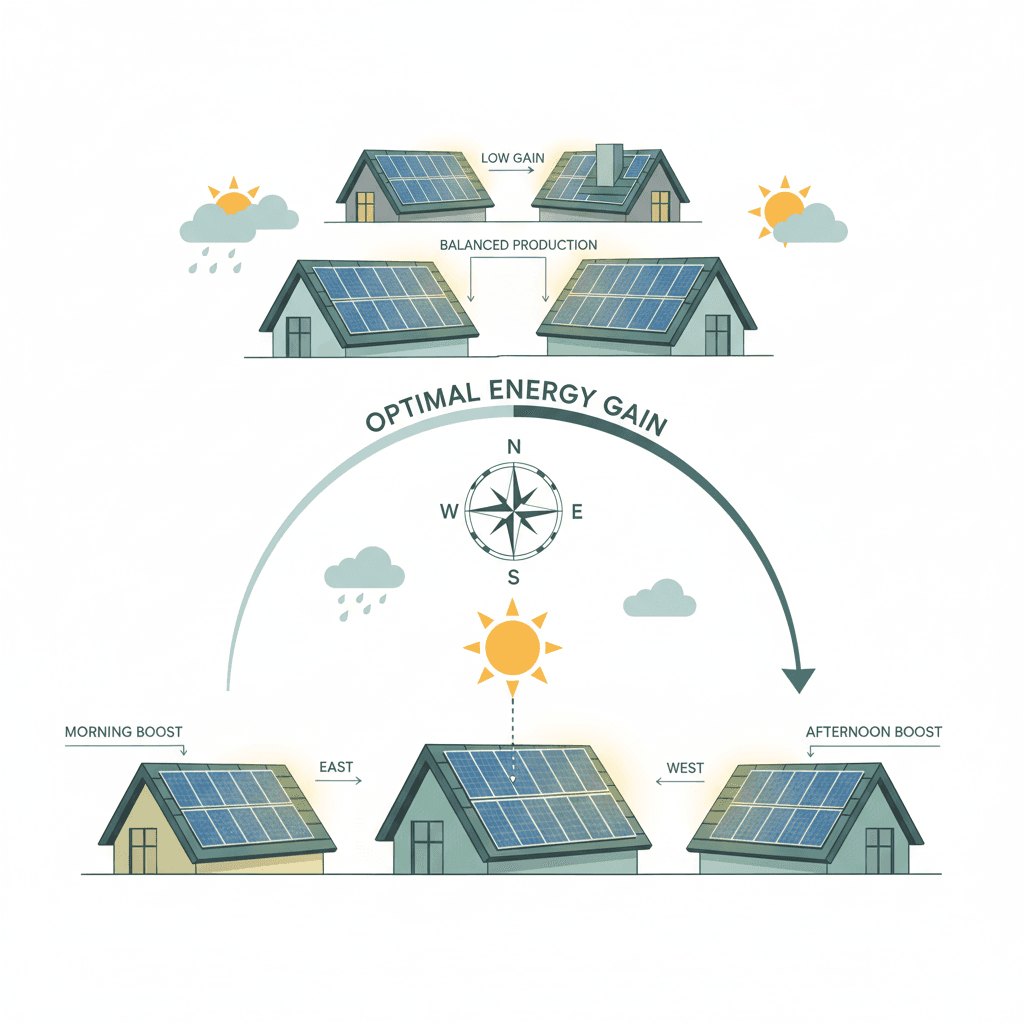
Optimizing solar panel orientation is crucial for maximizing energy production and return on investment. While south-facing panels are often considered ideal, various factors like roof direction, pitch, shading, and even aesthetic preferences play a significant role in determining the best configuration for your UK home. This guide explores these considerations to help you make informed decisions.
Key Points
- South-facing roofs generally offer the highest energy generation in the UK.
- East/west-facing roofs allow for increased system capacity by utilizing two roof surfaces.
- Modern panels perform better in low light, making north-facing installations a possibility (though with significantly reduced output).
- Roof pitch influences panel performance; shallower pitches on north-facing roofs yield better results.
- West-facing panels can be strategically paired with battery storage to maximize self-consumption in the evenings.
- Shading assessment is critical for accurate energy yield predictions.
Common Misconceptions
- Myth: Solar panels must be installed on a south-facing roof.
- Reality: East/west configurations can offer higher overall capacity.
- Myth: Roof pitch doesn't matter.
- Reality: Pitch affects the angle of incidence of sunlight and therefore energy generation.
- Myth: North-facing panels are always a waste of time.
- Reality: With modern panels and shallow pitches, they can contribute, albeit less efficiently.
Real-World Advice
In practice, achieving the 'ideal' orientation is often impossible. Many UK homes have roofs that face east, west, or a combination thereof. Instead of striving for perfect south-facing alignment, consider the following:
- East/West Systems: Distribute panels across east and west-facing roofs to capture sunlight throughout the day. This can provide a more consistent energy supply, especially useful for homes with high morning or evening energy demands.
- Battery Storage: Pair west-facing panels with battery storage to capture afternoon sun and use it during peak evening hours, reducing reliance on the grid.
- Shading Analysis: Use tools like Google's LiDAR data (often integrated into installer software) to accurately assess shading from trees, buildings, and other obstructions. This helps optimize panel placement to minimize shading losses.
UK-Specific Considerations
Several UK-specific factors influence panel orientation:
- Weather: The UK's variable weather means diffuse sunlight is common. Panels that perform well in low light conditions are advantageous.
- DNO Regulations: Your Distribution Network Operator (DNO) may have specific requirements regarding system size and grid connection, which can indirectly affect panel layout.
- Feed-in Tariffs/Export Tariffs: The Smart Export Guarantee (SEG) pays you for excess electricity exported to the grid. Understanding export tariffs can inform decisions about system size and orientation to maximize export revenue. Remember that SEG rates vary between providers.
- Planning Permission: In some cases, altering roof pitch or significantly changing the appearance of your roof may require planning permission. Check with your local council.
When This Isn't Right For You
Consider these situations where alternative solutions or further investigation may be needed:
- Extensive Shading: If your roof is heavily shaded throughout the day, solar panels may not be a viable option without significant tree trimming or other shading mitigation measures.
- Listed Buildings/Conservation Areas: Restrictions may apply to panel placement and appearance. Consult with your local planning authority.
- Very Low Energy Consumption: If your electricity usage is minimal, the payback period for a solar panel system may be excessively long.
- Roof Condition: Ensure your roof is in good condition and structurally sound before installing solar panels. Repairs or reinforcement may be necessary.
Before You Spend Money
Before investing in solar panels, take these steps:
- Assess Your Energy Needs: Understand your current electricity consumption patterns.
- Get Multiple Quotes: Obtain quotes from several reputable solar installers.
- Review System Designs: Carefully review the proposed system designs, paying attention to panel orientation, shading analysis, and estimated energy production.
- Check Installer Credentials: Verify that the installer is MCS (Microgeneration Certification Scheme) certified.
- Understand Warranties: Clarify the warranties offered on panels, inverters, and installation workmanship.
Frequently Asked Questions
Q: How much less energy will I get from north-facing panels?
A: Expect around 50% of the energy generation compared to south-facing panels, but this depends on the roof pitch. Shallower pitches will perform better.
Q: Is it worth installing panels on an east-facing roof?
A: Yes, especially if you have high morning energy demands. East-facing panels can capture sunlight early in the day.
Q: What is the ideal roof pitch for solar panels in the UK?
A: While 30-40 degrees is often cited as ideal, the best pitch is usually the existing pitch of your roof. Flat roof systems are typically angled at 15-20 degrees.
Q: How can I assess shading on my roof?
A: Solar installers use tools that incorporate LiDAR data to create shading models. You can also use online tools or apps to get a rough estimate.
Summary
Optimizing solar panel orientation in the UK involves balancing ideal conditions with real-world constraints. While south-facing roofs offer the highest potential energy generation, east/west configurations, strategic use of battery storage, and careful shading analysis can significantly improve system performance. By considering your energy needs, roof characteristics, and local conditions, you can make informed decisions to maximize the benefits of solar energy.