
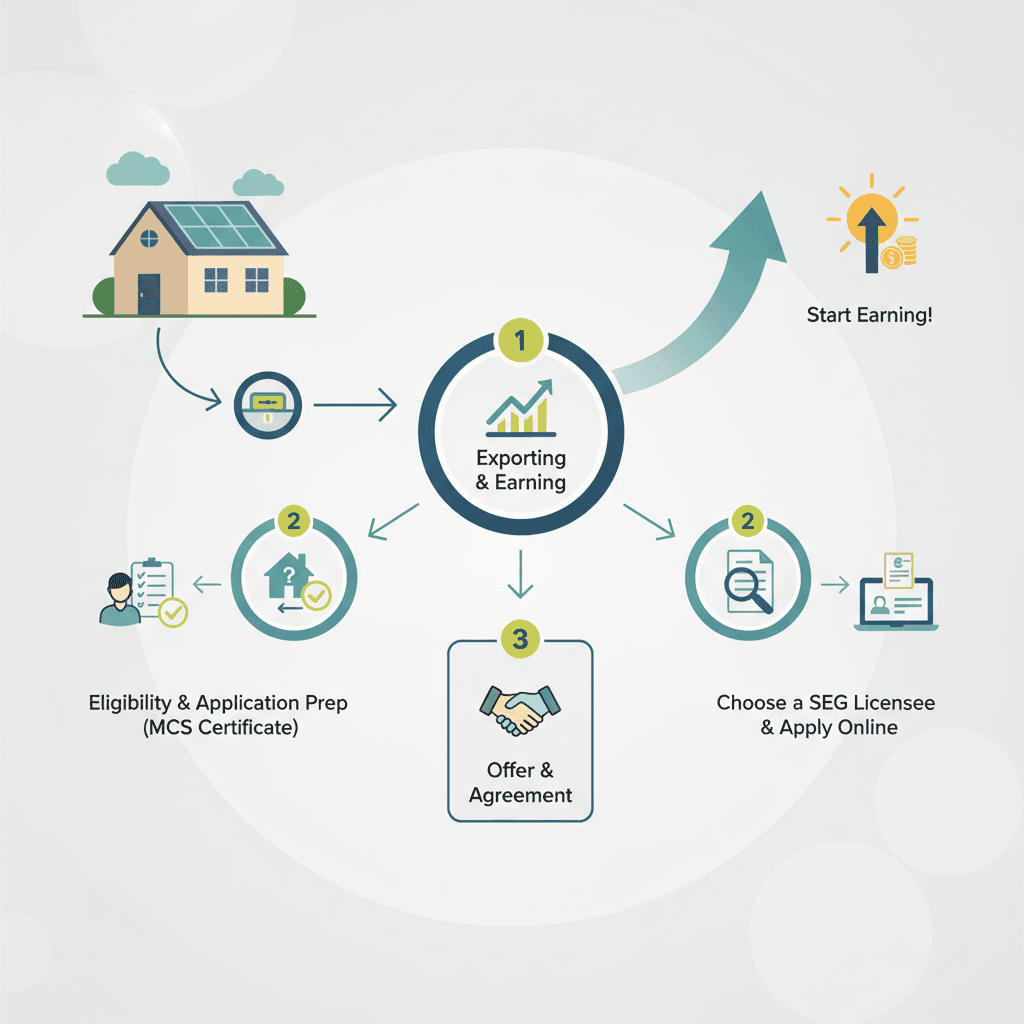
The Smart Export Guarantee (SEG) tariff application process is your gateway to earning money from excess solar electricity you export to the grid. While the process has become more streamlined recently, understanding the requirements and potential delays can help ensure a smooth application.
Key Points
- You need an MCS certificate from your solar installation
- DNO sign-off commissioning is required (linked to G98/G99 applications)
- Export MPAN generation is now largely automated, reducing delays
- SEG rates vary between suppliers. Ofgem sets no rate, and most tariffs were between 4p and 15p per kWh when we checked on 6 September 2026
- Different rates apply for domestic vs commercial customers
- You may benefit from switching energy supplier for better SEG rates
Common Misconceptions
- All SEG tariffs are the same - Rates vary drastically between suppliers
- I have to stay with my current energy supplier - You can switch suppliers for better SEG rates
- The application is complicated - With proper documentation, the process is straightforward
- Export MPAN delays are unavoidable - This has improved massively with automatic generation
Real-World Advice
Recent improvements have made the SEG application process much smoother. Export MPANs (the meter point reference needed for export payments) are now generated automatically in most cases, eliminating what used to be a major bottleneck. However, energy companies can still cause delays when setting up your account, so patience may be required during the final setup phase.
UK-Specific Considerations
The DNO sign-off commissioning is a crucial UK-specific requirement that's often overlooked. This connects to your G98 (under 3.68kW) or G99 (over 3.68kW) grid connection application and must be completed before SEG registration. Without proper DNO approval, your SEG application will be rejected. Make sure your installer handles this paperwork correctly during commissioning.
Before You Spend Money
Before applying for SEG, research different suppliers' rates - they can vary significantly. Don't assume your current energy supplier offers the best SEG rate. Consider whether switching suppliers might give you better returns on your exported electricity. Factor in any switching costs or complications, but remember that even small differences in export rates can add up over the 20+ year life of your solar system.
Frequently Asked Questions
Q: What documents do I need for SEG application?
A: You'll need your MCS certificate and DNO sign-off commissioning documentation. Your installer should provide both of these.
Q: How long does the SEG application take?
A: With automatic MPAN generation, the technical setup is much faster. Delays now mainly come from energy suppliers setting up accounts, which can vary by company.
Q: Should I switch energy supplier for better SEG rates?
A: Potentially yes. SEG rates vary significantly between suppliers, so it's worth comparing rates. Your installer can advise on which suppliers offer better rates for your situation.
Q: What if my DNO approval is delayed?
A: You cannot apply for SEG without completed DNO sign-off. Chase your installer to ensure they've submitted and received approval for your G98/G99 application.
Summary
SEG application success depends on having the right documentation - your MCS certificate and completed DNO sign-off commissioning. While technical delays have reduced with automatic MPAN generation, choosing the right supplier can significantly impact your returns. Don't rush into applying with your current supplier without comparing SEG rates across the market first.